
Article Plan: Gayatri Chalisa PDF in Gujarati
It explores the mantra’s significance, origins, and its connection to Vedic traditions and sun worship, alongside guidance on Purushcharan and Diksha.
The Gayatri Chalisa is a devotional hymn dedicated to the Goddess Gayatri, a revered deity in Hinduism embodying purity, wisdom, and enlightenment. Unlike a simple recitation of the Gayatri Mantra, the Chalisa expands upon its essence through forty verses, offering a more elaborate and immersive spiritual experience. It’s a powerful tool for devotees seeking blessings, knowledge, and liberation.

In the context of Gujarati-speaking communities, the availability of the Gayatri Chalisa in their native language is particularly significant. It allows for a deeper connection with the verses, fostering a more profound understanding and emotional resonance. The Chalisa isn’t merely a translation; it’s a culturally adapted form of worship, making the divine accessible to a wider audience.
The increasing popularity of the Gayatri Chalisa in Gujarati reflects a growing desire for spiritual practices that are both ancient and relevant to contemporary life.
The Significance of the Gayatri Mantra
The Gayatri Mantra is widely regarded as the most sacred mantra in Hinduism, often hailed as the “king of all mantras.” Its significance stems from its profound ability to illuminate the intellect, purify the mind, and bestow wisdom upon the chanter. It’s believed that consistent recitation can unlock hidden knowledge and potential within an individual.
Central to its power is the invocation of Savitr, the Sun God, representing the divine light that dispels darkness and ignorance. The mantra isn’t simply a prayer; it’s a contemplation on the divine essence present in all creation. It’s a request for guidance and enlightenment, seeking to align the individual with the universal consciousness.
The mantra’s structure, composed in the Gayatri meter – a specific Vedic poetic form – is itself considered sacred. This meter enhances the mantra’s vibrational energy, amplifying its effects. The Gayatri Chalisa, building upon this foundation, expands the mantra’s core message through forty verses, offering a comprehensive exploration of its themes.
For Gujarati speakers, accessing the Gayatri Chalisa PDF allows a deeper engagement with this powerful mantra, fostering a stronger connection to its spiritual benefits and cultural heritage. It’s a pathway to inner peace and self-realization.
Historical Origins of the Gayatri Mantra
The Gayatri Mantra’s origins are deeply rooted in the Vedic period of ancient India, appearing within the Rigveda – the oldest of the four Vedas. Attributed to the sage Vishwamitra, it’s believed to have been revealed to him after intense spiritual practice and penance. Vishwamitra, a powerful king-turned-sage, sought a mantra capable of granting immense power and wisdom.
Initially, the mantra wasn’t widely accessible, reserved for the priestly class – the Brahmins – who were entrusted with its preservation and recitation. Over time, its significance grew, becoming central to Vedic rituals and daily spiritual practice. The mantra’s association with Savitr, the Sun God, further solidified its importance, linking it to the life-giving energy of the sun.
The evolution of the mantra led to its incorporation into various Hindu traditions and schools of thought. The Gayatri Chalisa, a later devotional composition, represents an extension of this tradition, offering a more accessible and elaborate form of worship.
The availability of the Gayatri Chalisa in Gujarati, particularly in PDF format, ensures the preservation and dissemination of this ancient wisdom to a wider audience, bridging the gap between tradition and modern accessibility.
Gayatri Mantra and Vedic Meter (Gayatri)
The Gayatri Mantra’s name isn’t arbitrary; it’s intrinsically linked to the Gayatri meter – a specific Vedic prosodic form. This meter consists of 24 syllables, arranged in three lines of eight syllables each. The structure is crucial, as the mantra’s power is believed to be amplified by its adherence to this precise rhythmic pattern.
Vedic meters weren’t merely aesthetic devices; they were considered integral to the mantra’s efficacy, influencing its vibrational frequency and impact on the subtle energies of the practitioner. The Gayatri meter, in particular, is associated with intellect, clarity, and spiritual illumination.
The connection to the meter explains why the mantra is often recited with a specific intonation and rhythm. Maintaining the correct pronunciation and syllabic count is considered essential for unlocking its full potential. This emphasis on form highlights the Vedic understanding of sound as a powerful force.
The Gayatri Chalisa in Gujarati, while a devotional elaboration, still respects the foundational principles of the Gayatri meter, ensuring its verses resonate with the same vibrational energy. Accessing the PDF allows practitioners to study and internalize this rhythmic structure.

The Connection to Sun Worship (Savitr)
The Gayatri Mantra is deeply intertwined with Savitr, the Vedic solar deity representing the life-giving energy of the sun. The mantra directly invokes Savitr, seeking the illumination of intellect and spiritual awakening. This isn’t merely symbolic; the sun is viewed as a visible manifestation of the divine, a source of light, warmth, and sustenance.
Historically, the Gayatri Mantra was often recited facing the sun, acknowledging its role as a cosmic witness and energizer. The practice recognizes the sun’s power to dispel darkness – both literal and metaphorical – and to promote growth and vitality.

The term “Savitr” itself is embedded within the mantra, reinforcing this connection. Chanting the mantra is believed to harness the sun’s energy, enhancing concentration, memory, and overall well-being. This association explains why the mantra is particularly potent when practiced during sunrise.
When exploring the Gayatri Chalisa in Gujarati through a PDF, understanding this solar connection enriches the devotional experience. The verses often allude to the sun’s brilliance and its role in cosmic order, deepening the practitioner’s reverence.
What is a Chalisa?

A ‘Chalisa’ is a devotional hymn consisting of forty verses, originating within the Hindu tradition. The word itself derives from ‘chalis,’ meaning forty in Hindi. These hymns are dedicated to specific deities, saints, or spiritual concepts, serving as a powerful tool for focused worship and contemplation.

Chalisa compositions typically narrate the glories, virtues, and stories associated with the chosen subject. They are designed to be easily memorized and recited, making them accessible to devotees of all levels. The repetitive nature of the verses aids in concentration and fosters a deeper connection with the divine.
The structure of forty verses isn’t arbitrary; it’s believed to hold spiritual significance, representing a complete cycle or a period of intense spiritual practice. Reciting a Chalisa is considered a potent form of sadhana (spiritual discipline).
In the context of the Gayatri Chalisa in Gujarati, the PDF format allows for convenient access to these forty verses dedicated to the Gayatri Mantra. It provides a structured way to engage with the mantra’s essence and benefits, offering a pathway to spiritual growth.

The Structure of the Gayatri Chalisa
The Gayatri Chalisa, adhering to the traditional Chalisa format, comprises forty verses dedicated to the Gayatri Mantra and its associated energies. However, unlike some Chalisa compositions focused solely on narrative, the Gayatri Chalisa often blends descriptive praise with direct invocations of the mantra itself.
Each verse (shloka) typically builds upon the preceding one, progressively revealing the multifaceted glory of Gayatri – the goddess embodying the mantra’s power. The verses often highlight the mantra’s ability to bestow knowledge, wisdom, and spiritual liberation.
The Gujarati PDF versions generally maintain a consistent structure, beginning with invocations and concluding with expressions of devotion and surrender. Some editions may include explanatory notes or translations to aid understanding.
While variations exist between different authors’ interpretations, the core structure remains consistent: forty verses designed for rhythmic recitation. The verses are crafted to facilitate focused meditation on the Gayatri Mantra, enhancing its transformative effects. The PDF format allows for easy access and repeated study of this structured devotional practice.
Availability of the Gayatri Chalisa in Gujarati
A simple online search for “Gayatri Chalisa Gujarati PDF” yields numerous results, demonstrating the widespread availability of this devotional material. These PDFs often include transliteration in Gujarati script, facilitating correct pronunciation and understanding.
Furthermore, the Chalisa is sometimes included as part of larger collections of devotional literature in Gujarati, expanding its reach. The ease of access in digital format ensures that devotees can readily incorporate this practice into their daily spiritual routines.
Ketan Joshi and the Gujarati Chalisa PDF
Ketan Joshi is a recognized name associated with the readily available digital version of the Gayatri Chalisa in Gujarati. His PDF compilation has gained significant traction within online devotional communities, becoming a frequently sought-after resource for practitioners.
Joshi’s work is particularly notable for its clear presentation of the Chalisa’s verses in Gujarati script. This facilitates accurate recitation and comprehension for native speakers and learners alike. The PDF format ensures easy portability and accessibility across various devices.

Joshi’s contribution lies in making this traditional devotional text more accessible to a broader audience through digital means. His PDF serves as a valuable tool for those seeking to deepen their connection with the Gayatri Mantra and the Chalisa tradition within a Gujarati-speaking context.
Gayatri Chalisa Lyrics in Gujarati ⎻ Content Overview
The Gayatri Chalisa in Gujarati, as found in the PDF versions circulating online, comprises forty verses dedicated to the glory of the Gayatri Mantra and the Goddess Gayatri. These verses, written in Gujarati, expand upon the core essence of the mantra, detailing its benefits and significance.
The lyrical content typically begins with invocations and praises of Goddess Gayatri, often referencing her association with Lord Savitr (the Sun God) and Goddess Saraswati. Subsequent verses elaborate on the mantra’s power to purify the mind, enhance intellect, and bestow spiritual enlightenment.
Common themes within the Chalisa include descriptions of the mantra’s protective qualities, its ability to remove obstacles, and its role in achieving worldly success and liberation. The verses often employ poetic language and metaphors to convey the profound spiritual truths embedded within the Gayatri Mantra.
The PDF versions generally present the lyrics in a clear and readable format, facilitating easy recitation and understanding. Many include transliterations and translations to aid those unfamiliar with the Gujarati script. The Chalisa serves as a comprehensive guide to understanding and appreciating the transformative power of the Gayatri Mantra.
Gayatri Purushcharan and Sadhana
Gayatri Purushcharan, a dedicated spiritual practice, involves the rigorous repetition (Japa) of the Gayatri Mantra a significant number of times – traditionally 2.4 million. This practice, often undertaken with the guidance of a Guru (Diksha), aims to deeply internalize the mantra’s energy and achieve specific spiritual goals.
The Gayatri Chalisa, while not the Purushcharan itself, serves as a powerful preparatory and supplementary practice. Reciting the Chalisa before and after Japa can enhance focus, deepen devotion, and purify the mind, creating a conducive environment for successful Purushcharan.
Sadhana, encompassing various spiritual disciplines, integrates the Gayatri Mantra into daily life. This includes regular recitation, contemplation on the mantra’s meaning, and ethical conduct. The Gujarati PDF resources often emphasize the importance of sincerity, discipline, and faith during Sadhana.
Guidance from organizations like Gayatri Pariwar is frequently sought, though self-guided practice is also possible. Continuous guidance can be challenging for frequent travelers, highlighting the value of readily available resources like the Chalisa PDF for maintaining consistency in one’s spiritual journey.
The Role of Saraswati (Savitri) and Gayatri
The relationship between Saraswati, Savitri, and Gayatri is complex and deeply rooted in Vedic tradition. Many interpretations suggest they represent different facets of the same divine energy – the power of pure knowledge, illumination, and creative force.
Saraswati, often depicted as the goddess of learning, music, and arts, embodies the wisdom aspect. Savitri is closely linked to the Sun God (Savitr), representing the radiant energy that dispels darkness and inspires intellect. Gayatri, as the personification of the Gayatri Mantra, is the energizing force behind both.
The Gayatri Chalisa, in its Gujarati form, frequently acknowledges this interconnectedness. The verses often invoke all three goddesses, recognizing their combined power to bestow knowledge, prosperity, and spiritual liberation.
Understanding this trinity is crucial for a holistic approach to Gayatri Sadhana. The PDF resources available often emphasize that worshipping Gayatri is, in essence, worshipping Saraswati and Savitri, accessing the full spectrum of divine grace. This interconnectedness elevates the practice beyond mere mantra recitation, fostering a deeper spiritual understanding.
Learning the Gayatri Mantra ⎻ Guidance and Diksha
Traditionally, learning the Gayatri Mantra is considered most effective under the guidance of a qualified Guru, a sage, yogi, or Brahman priest. This ensures correct pronunciation, understanding of the mantra’s meaning, and proper initiation – known as Diksha.
However, accessibility to such Gurus can be limited, especially for those who travel frequently. In such cases, resources like the Gayatri Chalisa PDF in Gujarati, alongside materials from organizations like Gayatri Pariwar, can provide foundational knowledge.
Diksha isn’t merely a ritual; it’s a transmission of energy and a commitment to spiritual practice. While self-learning is possible, seeking guidance from a knowledgeable source is highly recommended.
The Gujarati Chalisa PDF often includes introductory notes on the mantra’s significance and proper recitation techniques. It serves as a starting point, but shouldn’t replace personalized instruction. Gayatri Purushcharan, a dedicated practice involving 2.4 lakh repetitions, ideally requires ongoing guidance to maintain focus and overcome obstacles.

Remember, sincere devotion and consistent practice are key, regardless of the learning method.
Variations of the Gayatri Mantra (Yama Mantra Example)
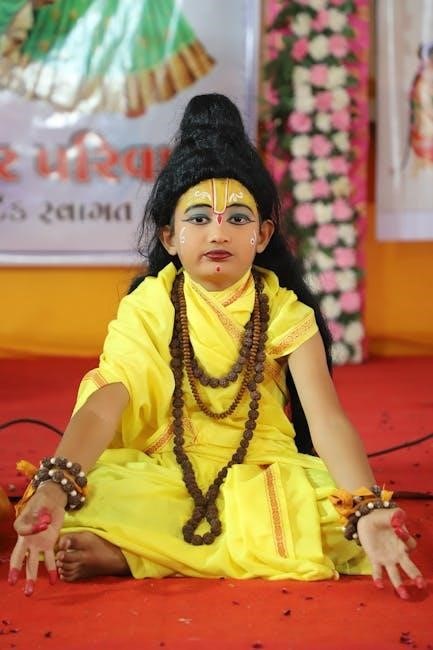
While the standard Gayatri Mantra is dedicated to Savitr, the Sun God, variations exist, tailored to different deities and purposes. These variations maintain the core Gayatri meter but alter the central deity invoked.
An example is the Gayatri Mantra dedicated to Lord Yama, found within the Linga Purana. This specific mantra is utilized for addressing concerns related to death, fear, and longevity. It demonstrates the adaptability of the Gayatri structure to diverse spiritual needs.
The existence of such variations highlights that the power of the Gayatri lies not only in the words themselves but also in the underlying Vedic meter (Gayatri) and the intention of the practitioner.
Accessing resources like the Gayatri Chalisa PDF in Gujarati may occasionally reveal these lesser-known variations, offering a broader understanding of the mantra’s potential. However, it’s crucial to approach these variations with respect and, ideally, under the guidance of someone familiar with their specific applications.
Understanding these nuances enriches the practice and demonstrates the depth of Vedic tradition.